Selasa, 24 Desember 2013

Hi Assalamualaikum para pembaca saya, semoga Allah selalu memberkati kita

Kali ini Admin akan membahas tentang budaya Islam, setelah beberapa waktu yang lali Admin menceritakan budaya, artis dan film barat.

Kali ini Admin akan membahas budaya Islam di benua biru Eropa.
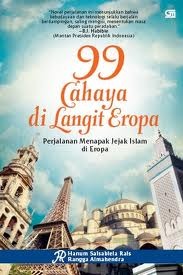
Sepertinya teman-teman tau saya akan merujuk kepada sebuah novel terkenal karya novelis Indonesia yang lagi "Booming"

Ya, 99 Cahaya di Langit Eropa
Novel ini memang sedang naik daun. Di dalam buku ini kita dapat mengetahui masa-masa kejayaan Islam di Eropa melalui kisah perjalanan Hanum Rais sang penulis. Admin memang belum membaca bukunya tetapi Admin sudah melihat Filmnya. Subhanallah berikut adalah beberapa tempat di Eropa yang diterangkan di Film 99 Cahaya di Langit Eropa.
Di dalam Film ini awalnya mengisahkan awal kehidupan Hanum Rais di Vienna,Austria. Awalnya memang dia bahadia bisa di Eropa karena harus mengikuti suaminya kuliah di Eropa. Namun lama kelamaan dia bosan, apalagi dia seorang Muslimah dan tidak fasih berbahasa Jerman. Nah seterusnya dia bertemu dengan Fatma Pasha, seorang Muslimah Turki. Berikut tempat - tempat peninggalan sejarah Islam di Eropa

Ya, ada yang unik di gambar ini, mengapa saya memajang Lukisan Bunda Maria dan Bayi Yesus Kristus?
lihatlah pada kerudung yang dipakai Bunda Maria, terdapat tulisan La ila ha illallah atau Tidak ada Tuhan selain Allah, Subhanallah. Ini adalah bukti kebesaran Islam di Eropa. untuk lebih lanjut sebaiknya saksikan trailer dari film ini,

Film ini juga mengajarkan kepada kita para Muslim dan Muslimah untuk belajar Toleransi dan bersabar, jangan mudah tersulut amarahnya. Memang tidak mudak menjadi seorang Muslim di Eropa namun inilah cara Allah mengajarkan kita bagaimana menjadi Muslim yang sebenarnya. Menyebarkan Islam dengan perdamaian, karena memang Islam itu adalah agama perdamaian Rahmatan lil alamin, Rahmat bagi seluruh alam. Mau sebagaimanapun orang menghina kita, kita harus sabar dan menganggapnya toleransi dan yakin serta mendoaakan suatu saat Allah akan membukaan pintun hidayah-Nya untuk orang itu.

sekian posting dari Admin sampai jumpa
Wassalamuallaikum Warahmatullahi Wabarakatuh.

Selasa, 03 Desember 2013

HOLY CITY MECCA

Hi today i will tell you about my holy city Mecca

Early history

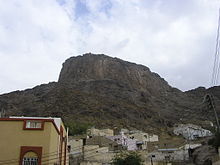
Makkah Al Mukarrammah seen from Jabal al-Nour
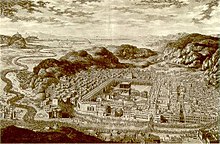
1787 Turkish map of the Masjid al-Haram and related religious sites (Jabal al-Nour)
Islamic tradition attributes the beginning of Mecca to Ishmael's descendants. Many Muslims point to the Old Testament chapter Psalm 84:3–6 and a mention of a pilgrimage at the Valley of Baca, that Muslims see as referring to the mentioning of Mecca as Bakkah in Qur'an Surah 3:96. Also the Greek historian Diodorus Siculus who lived between 60 BCE and 30 BCE writes about the isolated region of Arabia in his work Bibliotheca historica describing a holy shrine that Muslims see as referring to the Kaaba at Mecca "And a temple has been set-up there, which is very holy and exceedingly revered by all Arabians".Ptolemy may have called the city "Macoraba", though this identification is controversial.

Mecca was also mentioned in the Samaritan literature, in the Book of the "Secrets of Moses" (Asatir) which claimed that Mecca was built by Ishmael and his eldest son Nebaioth The Secrets of Moses” or Asatir book was suggested by some opinion to have been written in 10th century.,while another opinion suggests that it was written no later than the second half of the 3rd century BC.
Some time in the 5th century CE, the Kaaba was a place of worship for the deities of Arabia's pagan tribes. Mecca's most important pagan deity was Hubal, which had been placed there by the ruling Quraysh tribe and remained until the 7th century CE.
In the 5th century, the Quraysh took control of Mecca, and became skilled merchants and traders. In the 6th century they joined the lucrative spice trade as well, since battles in other parts of the world were causing trade routes to divert from the dangerous sea routes to the more secure overland routes. The Byzantine Empire had previously controlled the Red Sea, but piracy had been on the increase. Another previous route that ran through the Persian Gulf via the Tigris and Euphrates rivers, was also being threatened by exploitations from the Sassanid Empire, as well as being disrupted by the Lakhmids, the Ghassanids, and the Roman–Persian Wars. Mecca's prominence as a trading center also surpassed the cities of Petra and Palmyra. The Sassanids however did not always pose a threat to Mecca as in 575 CE they actually protected the Arabian city from invasion of the Kingdom of Axum, led by its Christian leader Abraha. The tribes of the southern Arabia, asked the Persian king Khosrau I for aid, in response to which he came south to Arabia with both foot-soldiers and a fleet of ships into Mecca. The Persian intervention prevented Christianity from spreading eastward into Arabia, and Mecca and the Islamic prophet Muhammad who was at the time a six year boy in the Quraysh tribe "would not grow up under the cross."
By the middle of the 6th century, there were three major settlements in northern Arabia, all along the south-western coast that borders the Red Sea, in a habitable region between the sea and the great mountains to the east. Although the area around Mecca was completely barren, it was the wealthiest of the three settlements with abundant water via the renowned Zamzam Well and a position at the crossroads of major caravan routes.
The harsh conditions and terrain of the Arabian peninsula meant a near-constant state of conflict between the local tribes, but once a year they would declare a truce and converge upon Mecca in an annual pilgrimage. Up to the 7th century, this journey was intended for religious reasons by the pagan Arabs to pay homage to their shrine, and to drink from the Zamzam Well. However, it was also the time each year that disputes would be arbitrated, debts would be resolved, and trading would occur at Meccan fairs. These annual events gave the tribes a sense of common identity and made Mecca an important focus for the peninsula.
Camel caravans, said to have first been used by Muhammad's great-grandfather, were a major part of Mecca's bustling economy. Alliances were struck between the merchants in Mecca and the local nomadic tribes, who would bring goods – leather, livestock, and metals mined in the local mountains – to Mecca to be loaded on the caravans and carried to cities in Syria and Iraq. Historical accounts also provide some indication that goods from other continents may also have flowed through Mecca. Goods from Africa and the Far East passed through en route to Syria including spices, leather, medicine, cloth, and slaves; in return Mecca received money, weapons, cereals and wine, which in turn were distributed throughout Arabia. The Meccans signed treaties with both the Byzantines and the Bedouins, and negotiated safe passages for caravans, giving them water and pasture rights. Mecca became the center of a loose confederation of client tribes, which included those of the Banu Tamim. Other regional powers such as the Abyssinian, Ghassan, and Lakhm were in decline leaving Meccan trade to be the primary binding force in Arabia in the late 6th century.

Thamudic Inscriptions

Some Thamudic inscription that were discovered in south Jordan contained names of some individuals such as "Abd Mekkat" which means in English "Servant of Mecca".
There were also some other inscription that contained names such as "Makky" which means "The Meccan", but Professor "Jawwad Ali" from the University of Baghdad stated that there's also a probability of a tribe named "Mecca".

Tradition

According to Islamic tradition, the history of Mecca goes back to Abraham (Ibrahim) who built the Kaaba with the help of his elder son Ishmael in around 2000 BCE when the inhabitants of what was then known as Bakkah had fallen away from the original monotheism of Abraham through the influence of the Amalekites.

Muhammad and conquest of Mecca

Jabal al-Nour is where Muhammad is believed to have received the first revelation of God through the Archangel Gabriel.
Muhammad was born in Mecca in 570, and thus Islam has been inextricably linked with it ever since. He was born in a minor faction, the Hashemites, of the ruling Quraysh tribe. It was in Mecca, in the nearby mountain cave of Hira on Jabal al-Nour, that, according to Islamic tradition, Muhammad began receiving divine revelations from God through the Archangel Gabriel in 610 AD, and advocated his form of Abrahamic monotheism against Meccan paganism. After enduring persecution from the pagan tribes for 13 years, Muhammad emigrated (see Hijra) in 622 with his companions, the Muhajirun, to Yathrib (later called Medina). The conflict between the Quraysh and the Muslims, however, continued: The two fought in the Battle of Badr, where the Muslims defeated the Quraysh outside Medina; while the Battle of Uhud ended indecisively. Overall, Meccan efforts to annihilate Islam failed and proved to be costly and unsuccessful. During the Battle of the Trench in 627, the combined armies of Arabia were unable to defeat Muhammad's forces .
In 628, Muhammad and his followers wanted to enter Mecca for pilgrimage, but were blocked by the Quraysh. Subsequently, Muslims and Meccans entered into the Treaty of Hudaybiyyah, whereby the Quraysh promised to cease fighting Muslims and promised that Muslims would be allowed into the city to perform the pilgrimage the following year. It was meant to be a ceasefire for 10 years. However, just two years later, the Quraysh violated the truce by slaughtering a group of Muslims and their allies. Muhammad and his companions, now 10,000 strong, marched into Mecca. However, instead of continuing their fight, the city of Mecca surrendered to Muhammad, who declared peace and amnesty for its inhabitants. The pagan imagery was destroyed by Muhammad's followers and the location Islamized and rededicated to the worship of God. Mecca was declared as the holiest site in Islam ordaining it as the center of Muslim pilgrimage, one of the faith's Five Pillars. Then, Muhammad returned to Medina, after assigning Akib ibn Usaid as governor of the city. His other activities in Arabia led to the unification of the peninsula.
Muhammad died in 632, but with the sense of unity that he had passed on to his Ummah (Islamic nation), Islam began a rapid expansion, and within the next few hundred years stretched from North Africa into Asia and parts of Europe. As the Islamic Empire grew, Mecca continued to attract pilgrims from all across the Muslim world and beyond, as Muslims came to perform the annual Hajj pilgrimage.
Mecca also attracted a year-round population of scholars, pious Muslims who wished to live close to the Kaaba, and local inhabitants who served the pilgrims. Due to the difficulty and expense of the Hajj, pilgrims arrived by boat at Jeddah, and came overland, or joined the annual caravans from Syria or Iraq.

Medieval and pre-modern times

Mecca was never the capital of any of the Islamic states but Muslim rulers did contribute to its upkeep. During the reigns of Umar (634–44 CE) and Uthman ibn Affan (644–56) concerns of flooding caused the caliphs to bring in Christian engineers to build barrages in the low-lying quarters and construct dykes and embankments to protect the area round the Kaaba.
Muhammad's migration to Medina shifted the focus away from Mecca, this focus moved still more when Ali, the fourth caliph took power choosing Kufa as his capital. The Umayyad Caliphate moved the capital to Damascus in Syria and the Abbasid Caliphate to Baghdad, in modern-day Iraq, which remained the center of the Islamic Empire for nearly 500 years. Mecca re-entered Islamic political history during the Second Islamic Civil War, when it was held by Abd Allah ibn al-Zubayr, an early Muslim who opposed the Umayyad caliphs. The city was twice besieged by the Umayyads, in 683 and 692. For some time thereafter the city figured little in politics, remaining a city of devotion and scholarship governed by the Hashemite Sharifs.
In 930, Mecca was attacked and sacked by Qarmatians, a millenarian Ismaili Muslim sect led by Abū-Tāhir Al-Jannābī and centered in eastern Arabia.The Black Death pandemic hit Mecca in 1349.
In 1517, the Sharif, Barakat bin Muhammed, acknowledged the supremacy of the Ottoman Caliph but retained a great degree of local autonomy.
In 1803 the city was captured by the First Saudi State, which held Mecca until 1813. This was a massive blow to the prestige of the (Turkish) Ottoman Empire, which had exercised sovereignty over the holy city since 1517. The Ottomans assigned the task of bringing Mecca back under Ottoman control to their powerful Khedive (viceroy) of Egypt, Muhammad Ali Pasha. Muhammad Ali Pasha successfully returned Mecca to Ottoman control in 1813.
In 1818, followers of the Salafi juristic school were again defeated, but some of the Al Saud clan survived and founded the Second Saudi State that lasted until 1891 and lead on to the present country of Saudi Arabia.
Mecca in 1850
Mecca in 1910
Another view of Mecca in 1910
Mecca was regularly afflicted with cholera epidemics.27 epidemics were recorded during pilgrimages from the 1831 to 1930. More than 20,000 pilgrims died of cholera during the 1907–08 hajj.

Revolt of Sharif of Mecca

In World War I, the Ottoman Empire was at war with Britain and its allies, having sided with Germany. It had successfully repulsed an attack on Istanbul in the Gallipoli Campaign and on Baghdad in the Siege of Kut. The British agent T E Lawrence conspired with the Ottoman governor Syed Hussain bin Ali, the Sharif of Mecca. Hussein bin Ali revolted against the Ottoman Empire from Mecca, and it was the first city captured by his forces in the Battle of Mecca (1916). Sharif's revolt proved a turning point of the war on the eastern front. Sharif Hussein declared a new state, the Kingdom of Hejaz, and declared Mecca as the capital of the new kingdom.

Saudi Arabia

Following the Battle of Mecca (1924), the Sharif of Mecca was overthrown by the Saud family, and Mecca was incorporated into Saudi Arabia.
Under Saudi rule, much of the historic city has been demolished as a result of construction programs – see below.
On November 20, 1979 two hundred armed Islamist dissidents led by Saudi preacher Juhayman al-Otaibi seized the Grand Mosque. They claimed that the Saudi royal family no longer represented pure Islam and that the Masjid al-Haram (The Sacred Mosque) and the Kaaba, must be held by those of true faith. The rebels seized tens of thousands of pilgrims as hostages and barricaded themselves in the mosque. The siege lasted two weeks, and resulted in several hundred deaths and significant damage to the shrine, especially the Safa-Marwa gallery. Pakistani forces carried out the final assault; they were assisted with weapons, logistics and planning by an elite team of French commandos from The French GIGN commando unit.

Sabtu, 16 November 2013

FOR KATY CATS

Hi i want to share a little piece of Katy Perry so check it out

Katheryn Elizabeth "Katy" Hudson(born October 25, 1984), better known by her stage name Katy Perry, is an American singer, songwriter, businesswoman, philanthropist and actress. She was born and raised in Santa Barbara, California. Having had very little exposure to mainstream pop music in her childhood, she pursued a career in gospel music as a teen and released her debut studio album, Katy Hudson, in March 2001. She also recorded a collaborative album with The Matrix and a solo album she worked on with Glen Ballard, the latter of which was never released.
In April 2007, Perry signed a recording contract with Capitol Records. She attracted media attention with the November 2007 online release of "Ur So Gay" and rose prominence with the June 2008 release of her second album, One of the Boys, which produced the singles "I Kissed a Girl", "Hot n Cold", "Thinking of You", and "Waking Up in Vegas". The project was further promoted through the Hello Katy Tour. In November 2009, she released a live album titled MTV Unplugged, which features performances of several tracks from One of the Boys. Perry's third record, Teenage Dream, was released in August 2010 and spawned the Billboard Hot 100 chart-topping singles "California Gurls", "Teenage Dream", "Firework", "E.T.", and "Last Friday Night (T.G.I.F.)". In doing so, it became the first album recorded by a female artist in history to produce five number-one hits, and the second album overall after Michael Jackson's August 1987 album Bad. Perry embarked on the California Dreams Tour following its release. In March 2012, Teenage Dream was re-released as Teenage Dream: The Complete Confection and produced the number-one single "Part of Me". Her fourth album, Prism, was released in October 2013 and was preceded by singles "Roar" and "Unconditionally".
Perry has received numerous awards and nominations, including nine Grammy nominations and Billboard dubbed her as 2012's Woman of the . She remains the only artist to spend 69 consecutive weeks in the top ten of the Hot 100.Perry is also the third best selling digital singles artist in US according to RIAA.She has ventured into celebrity endorsement and released fragrances Purr, Meow, and Killer Queen. In July 2011, she made her film debut voicing Smurfette in The Smurfs. Perry was ranked at number fourteen on Billboard's list of top moneymakers of 2011, grossing more than $11 million. In July 2012, she released her 3D autobiographical documentary film, Katy Perry: Part of Me, which concentrated on her life as a touring artist and the breakdown of her one-year marriage to English actor/comedian Russell Brand. As of November 2013, Perry had sold over 11 million albums and 81 million singles worldwide and her singles are some of the best-selling worldwide.

Katy Perry UNICEF 2012.jpg


hi wizard i would tell you some information about LORD VOLDEMORT


OMG THAT IS A BAD, VERY BAD PERSON, yes, i want to talk about him so check it out

Lord Voldemort (born Tom Marvolo Riddle) is a fictional character and the main antagonist of J. K. Rowling's Harry Potter series. Voldemort first appeared in Harry Potter and the Philosopher's Stone, which was released in 1997. Voldemort appeared either in person or in flashbacks in each book and film adaptation in the series, except the third, Harry Potter and the Prisoner of Azkaban, where he is mentioned.
In the series, Voldemort is the archenemy of Harry Potter, who according to a prophecy has "the power to vanquish the Dark Lord". Almost no witch or wizard dares to speak his name, instead referring to him by epithets such as "You-Know-Who", "He-Who-Must-Not-Be-Named" or "the Dark Lord". Voldemort's obsession with blood purity signifies his aim to rid the wizarding world of Muggle (non-magical) heritage and to conquer both worlds, Muggle and wizarding, to achieve pure-blood dominance. Through his mother's family, he is the last descendant of wizard Salazar Slytherin,one of the four founders of Hogwarts School of Witchcraft and Wizardry. He is the leader of the Death Eaters, a group of evil wizards and witches dedicated to ridding the Wizarding World of Muggles and establishing Voldemort as its supreme ruler.


he also have 7 horcrux


oke so that about voldemort i hope you enjoy it, stay tune in my blog and stay magic, Obliviate

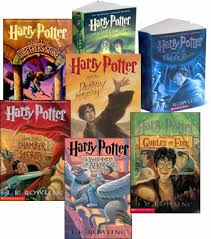
this time i would like to post about Harry Potter
Yes the most fenomenal epic story so lets check it out

The novels revolve around Harry Potter, an orphan who discovers at the age of eleven that he is a wizard, living within the ordinary world of non-magical people, known as Muggles.His ability is inborn and such children are invited to attend a school that teaches the necessary skills to succeed in the wizarding world.Harry becomes a student at Hogwarts School of Witchcraft and Wizardry and it is here where most of the novels' events take place. As Harry develops through his adolescence, he learns to overcome the problems that face him: magical, social and emotional, including ordinary teenage challenges such as friendships and exams, and the greater test of preparing himself for the confrontation that lies ahead.
Each book chronicles one year in Harry's lifewith the main narrative being set in the years 1991–98.The books also contain many flashbacks, which are frequently experienced by Harry viewing the memories of other characters in a device called a Pensieve.
The environment Rowling created is completely separate from reality yet also intimately connected to it. While the fantasy land of Narnia is an alternative universe and the Lord of the Rings' Middle-earth a mythic past, the wizarding world of Harry Potter exists in parallel within the real world and contains magical versions of the ordinary elements of everyday life. Many of its institutions and locations are recognisable, such as London. It comprises a fragmented collection of overlooked hidden streets, ancient pubs, lonely country manors and secluded castles that remain invisible to the Muggle population.

Early years

When the first novel of the series Harry Potter and the Philosopher's Stone (published in some countries as Harry Potter and the Sorcerer's Stone) opens, it is clear some remarkable event has taken place in the wizarding world, an event so very remarkable, even the Muggles notice signs of it. The full background to this event and to the person of Harry Potter is only revealed gradually, through the series. After the introductory chapter, the book leaps forward to a time shortly before Harry Potter's eleventh birthday, and it is at this point that his background begins to be revealed.
Harry's first contact with the wizarding world is through a half-giant, Rubeus Hagrid, keeper of grounds and keys at Hogwarts. Hagrid reveals some of Harry's history Harry learns that as a baby he witnessed his parents' murder by the power-obsessed dark wizard, Lord Voldemort, who then attempted to kill him also. For reasons not immediately revealed, the spell with which Voldemort tried to kill Harry rebounded. Harry survived with only a lightning-shaped scar on his forehead as a memento of the attack, and Voldemort disappeared. As its inadvertent saviour from Voldemort's reign of terror, Harry has become a living legend in the wizarding world. However, at the orders of the venerable and well-known wizard Albus Dumbledore, the orphaned Harry had been placed in the home of his unpleasant Muggle (non-wizard) relatives, the Dursleys, who had him safe but hid his true heritage from him in hopes that he would grow up "normal".\
With Hagrid's help, Harry prepares for and undertakes his first year of study at Hogwarts. As Harry begins to explore the magical world, the reader is introduced to many of the primary locations used throughout the series. Harry meets most of the main characters and gains his two closest friends: Ron Weasley, a fun-loving member of an ancient, large, happy, but hard-up wizarding family, and Hermione Granger, a gifted and hardworking witch of non-magical parentage.[Harry also encounters the school's potions master, Severus Snape, who displays a deep and abiding dislike for him. The plot concludes with Harry's second confrontation with Lord Voldemort, who in his quest for immortality, yearns to gain the power of the Philosopher's Stone, a substance that gives everlasting life.
The series continues with Harry Potter and the Chamber of Secrets describing Harry's second year at Hogwarts. He and his friends investigate a 50-year-old mystery that appears tied to recent sinister events at the school. Ron's younger sister, Ginny Weasley, enrols in her first year at Hogwarts, and finds a notebook which turns out to be Voldemort's diary from his school days. Ginny becomes possessed by Voldemort through the diary and opens the "Chamber of Secrets", unleashing an ancient monster which begins attacking students at Hogwarts. The novel delves into the history of Hogwarts and a legend revolving around the Chamber. For the first time, Harry realises that racial prejudice exists in the wizarding world, and he learns that Voldemort's reign of terror was often directed at wizards who were descended from Muggles. Harry also learns that his ability to speak Parseltongue, the language of snakes, is rare and often associated with the Dark Arts. The novel ends after Harry saves Ginny's life by destroying a basilisk and the enchanted diary which has been the source of the problems.
The third novel, Harry Potter and the Prisoner of Azkaban, follows Harry in his third year of magical education. It is the only book in the series which does not feature Voldemort. Instead, Harry must deal with the knowledge that he has been targeted by Sirius Black, an escaped murderer believed to have assisted in the deaths of Harry's parents. As Harry struggles with his reaction to the dementors—dark creatures with the power to devour a human soul—which are ostensibly protecting the school, he reaches out to Remus Lupin, a Defence Against the Dark Arts teacher who is eventually revealed to be a werewolf. Lupin teaches Harry defensive measures which are well above the level of magic generally shown by people his age. Harry learns that both Lupin and Black were close friends of his father and that Black was framed by their fourth friend, Peter Pettigrew. In this book, another recurring theme throughout the series is emphasised—in every book there is a new Defence Against the Dark Arts teacher, none of whom lasts more than one school year.

Voldemort returns


During Harry's fourth year of school (detailed in Harry Potter and the Goblet of Fire) Harry is unwillingly entered as a participant in the Triwizard Tournament, a dangerous contest where Harry must compete against a witch and a wizard "champion" from visiting schools as well as another Hogwarts student.Harry is guided through the tournament by Professor Alastor "Mad-Eye" Moody, who turns out to be an impostor – one of Voldemort's supporters named Barty Crouch, Jr in disguise. The point at which the mystery is unravelled marks the series' shift from foreboding and uncertainty into open conflict. Voldemort's plan to have Crouch use the tournament to bring Harry to Voldemort succeeds. Although Harry manages to escape, Cedric Diggory, the other Hogwarts champion in the tournament, is killed and Voldemort re-enters the wizarding world with a physical body.
In the fifth book,
 Harry Potter and the Order of the Phoenix, Harry must confront the newly resurfaced Voldemort. In response to Voldemort's reappearance, Dumbledore re-activates the Order of the Phoenix, a secret society which works from Sirius Black's dark family home to defeat Voldemort's minions and protect Voldemort's targets, especially Harry. Despite Harry's description of Voldemort's recent activities, the Ministry of Magic and many others in the magical world refuse to believe that Voldemort has returned. In an attempt to counter and eventually discredit Dumbledore, who along with Harry is the most prominent voice in the wizarding world attempting to warn of Voldemort's return, the Ministry appoints Dolores Umbridge as the High Inquisitor of Hogwarts. She transforms the school into a dictatorial regime and refuses to allow the students to learn ways to defend themselves against dark magic.
Harry forms "Dumbledore's Army", a secret study group to teach his classmates the higher-level skills of Defence Against the Dark Arts that he has learned. An important prophecy concerning Harry and Voldemort is revealed, and Harry discovers that he and Voldemort have a painful connection, allowing Harry to view some of Voldemort's actions telepathically. In the novel's climax, Harry and his friends face off against Voldemort's Death Eaters. Although the timely arrival of members of the Order of the Phoenix saves the children's lives, Sirius Black is killed in the conflict.
In the sixth book, Harry Potter and the Half-Blood Prince, Voldemort begins waging open warfare. Harry and friends are relatively protected from that danger at Hogwarts. They are subject to all the difficulties of adolescence; Harry eventually begins dating Ginny Weasley. Near the beginning of the novel, Harry is given an old potions textbook filled with annotations and recommendations signed by a mysterious writer, "the Half-Blood Prince". This book is a source of scholastic success, but because of the potency of the spells that are written in it, becomes a source of concern. Harry takes private lessons with Dumbledore, who shows him various memories concerning the early life of Voldemort. These reveal that Voldemort, to preserve his life, has split his soul into pieces, creating a series of horcruxes, evil enchanted items hidden in various locations, one of which was the diary destroyed in the second book.Harry's snobbish adversary, Draco Malfoy, attempts to attack Dumbledore, and the book culminates in the killing of Dumbledore by Professor Snape, the titular Half-Blood Prince.
Harry Potter and the Deathly Hallows, the last book in the series, begins directly after the events of the sixth book. Voldemort has completed his ascension to power and gains control of the Ministry of Magic. Harry, Ron, and Hermione drop out of school so that they can find and destroy Voldemort's remaining horcruxes. To ensure their own safety as well as that of their family and friends, they are forced to isolate themselves. As they search for the horcruxes, the trio learns details about Dumbledore's past, as well as Snape's true motives—he had worked on Dumbledore's behalf since the murder of Harry's mother.
The book culminates in the Battle of Hogwarts. Harry, Ron, and Hermione, in conjunction with members of the Order of the Phoenix and many of the teachers and students, defend Hogwarts from Voldemort, his Death Eaters, and various magical creatures. Several major characters are killed in the first wave of the battle. After learning that he himself is a horcrux, Harry surrenders himself to Voldemort, who casts a killing curse at him. However, the defenders of Hogwarts do not surrender after learning this, but continue to fight on. Having managed to return from the dead, Harry finally faces Voldemort, whose horcruxes have all been destroyed. In the subsequent battle, Voldemort's curse rebounds off of Harry's spell and kills Voldemort. An epilogue describes the lives of the surviving characters and the effects on the wizarding world.


i hope you like my post about Harry Potter so stay tune in my blog, and stay magic.. Obliviate